Manual & Intelligence Radiation Survey Platform

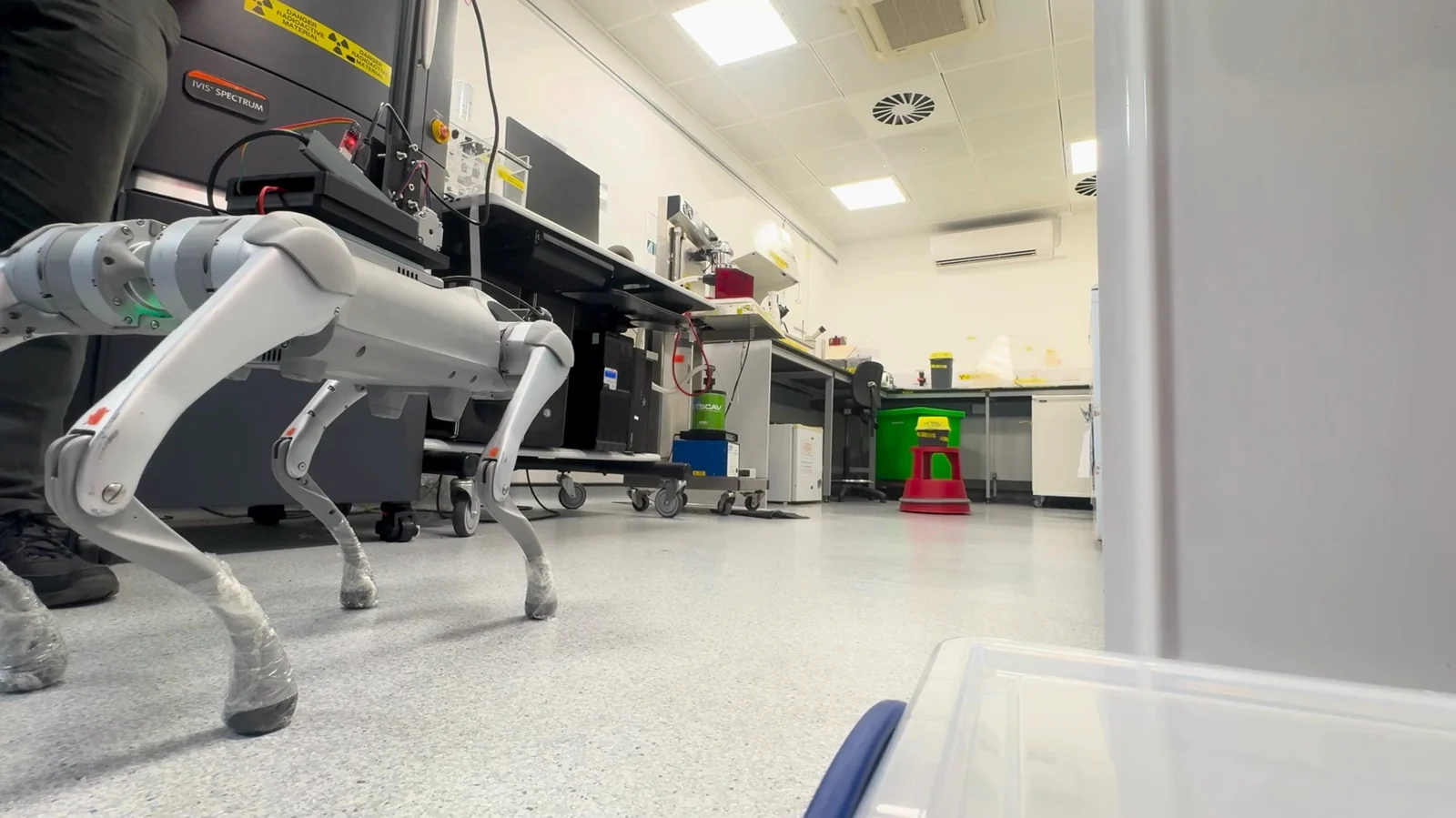
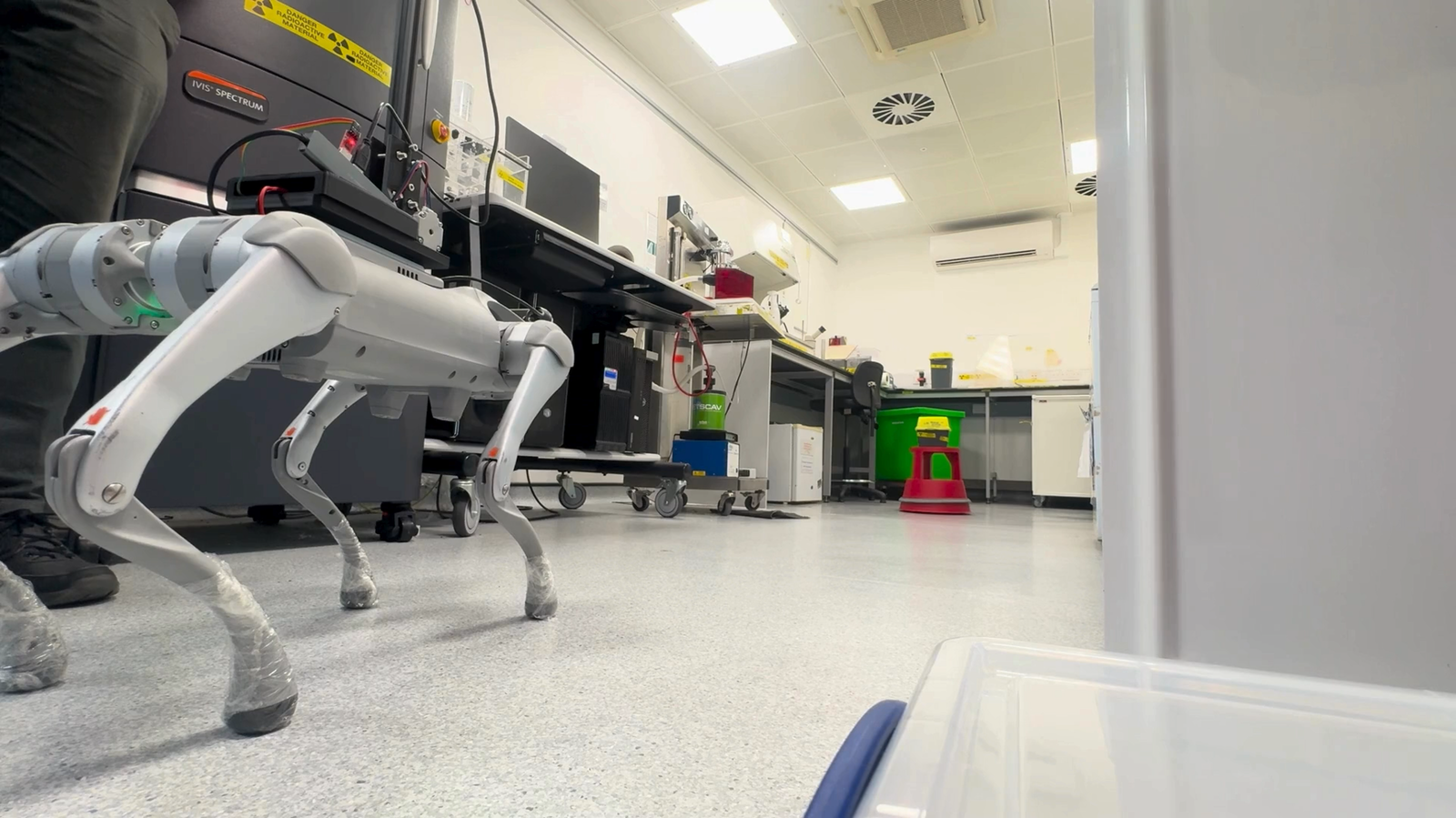
Unitree Go2 during supervised physical testing in a laboratory
summer-radiation-physical-test-poster.png
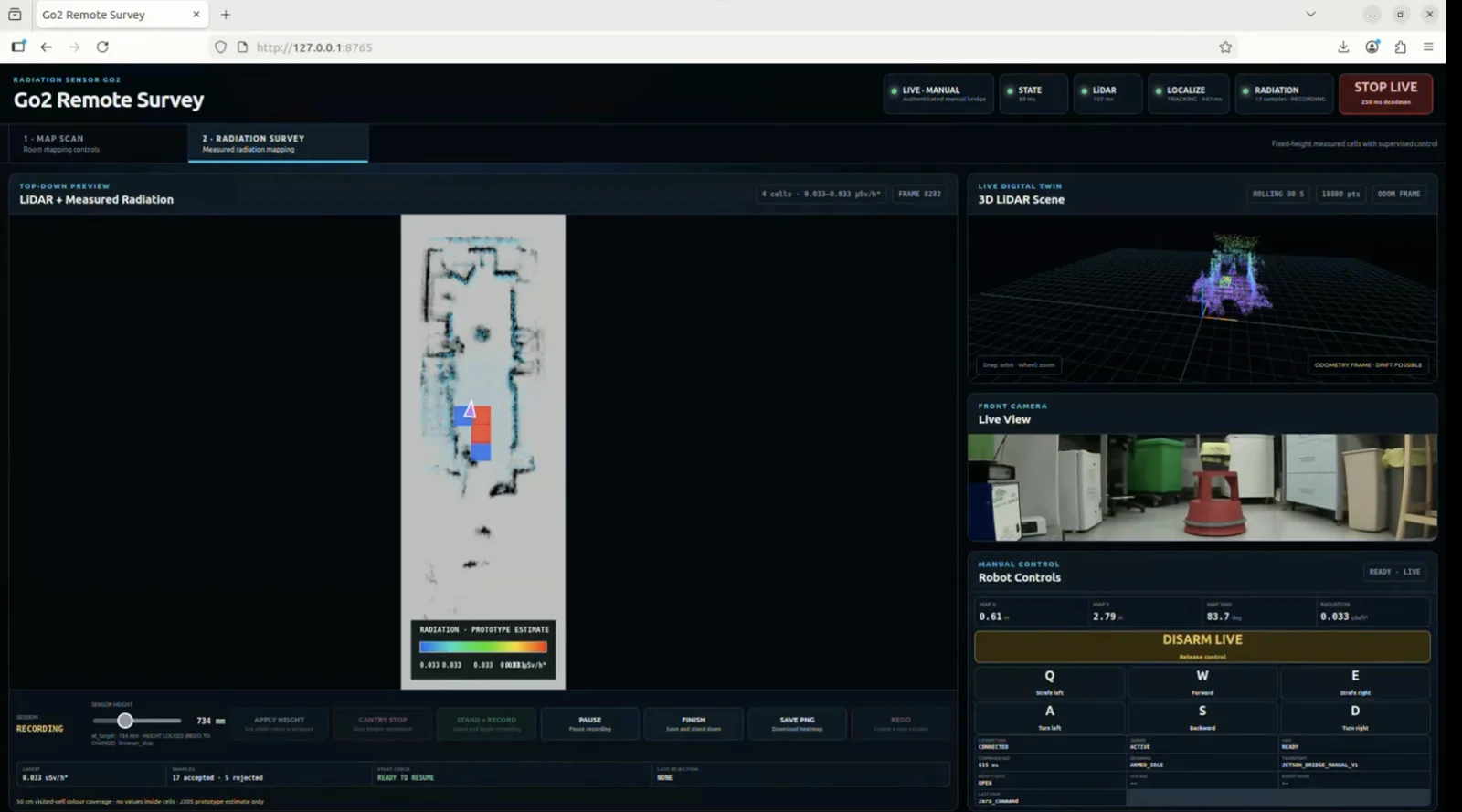
Go2 Remote Survey dashboard showing measured radiation mapping, live 3D LiDAR, front-camera view, and supervised manual controls
summer-radiation-dashboard.png
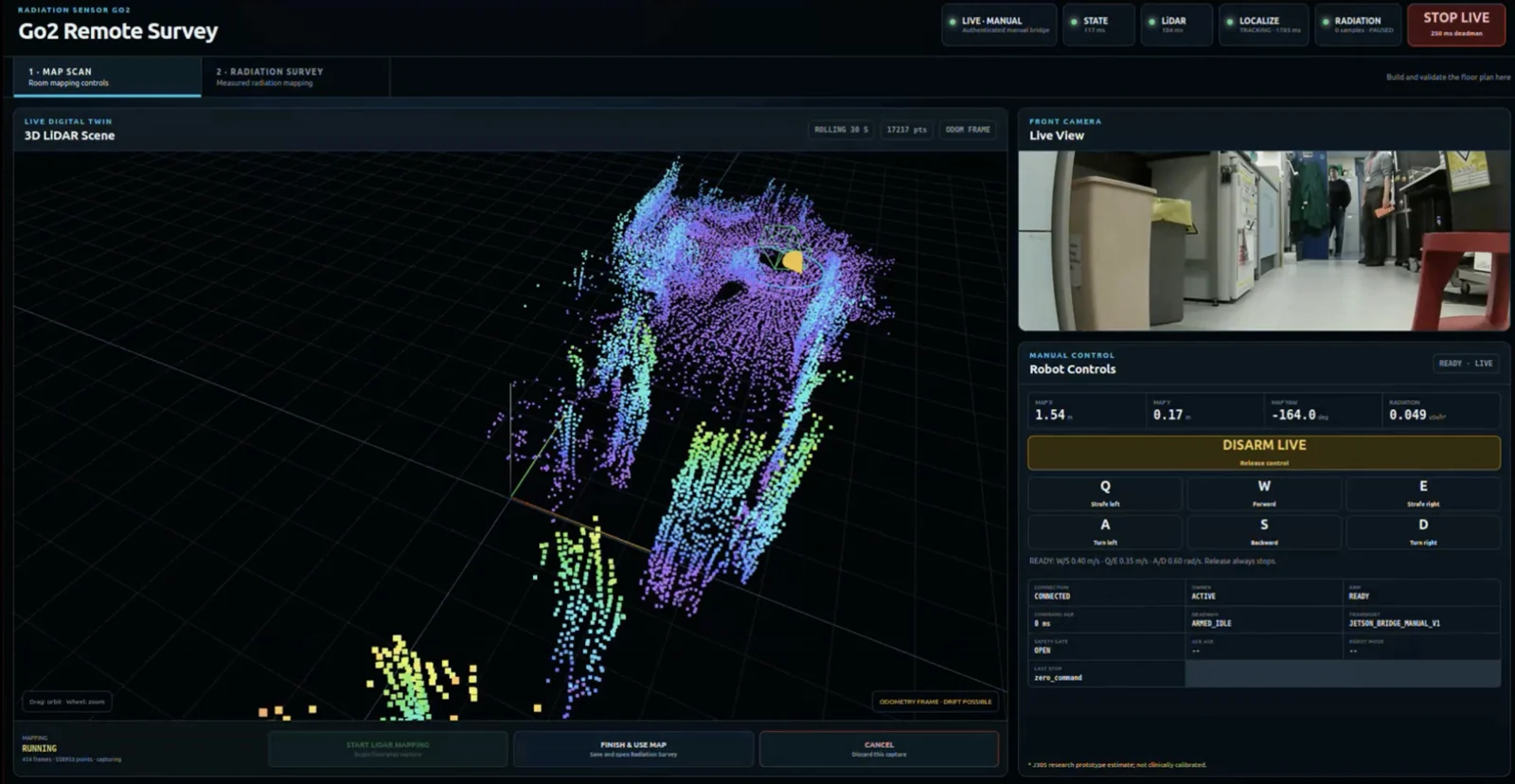
Go2 Remote Survey mapping view showing the live 3D LiDAR scene, front camera, and manual control status
summer-radiation-lidar-mapping.png
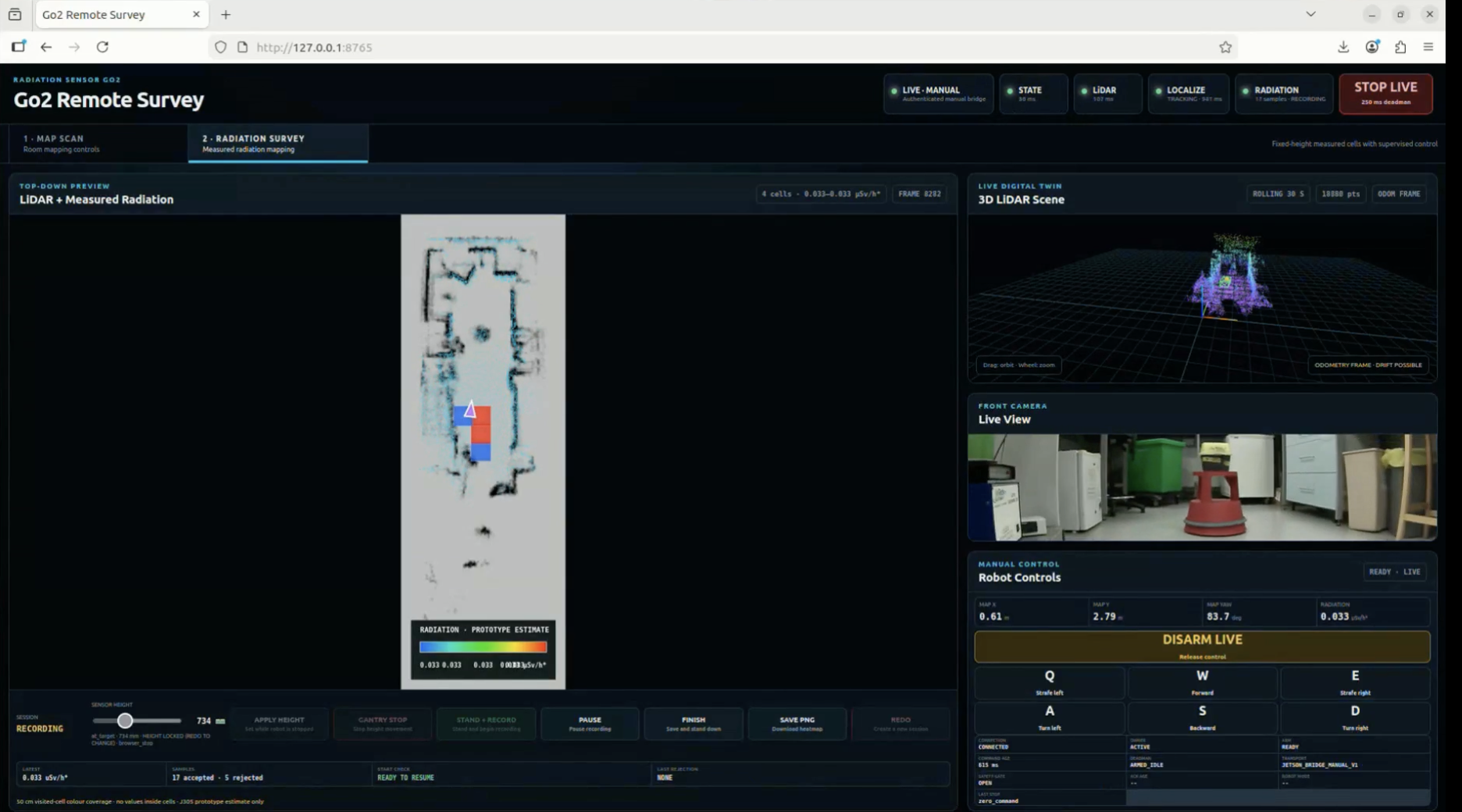
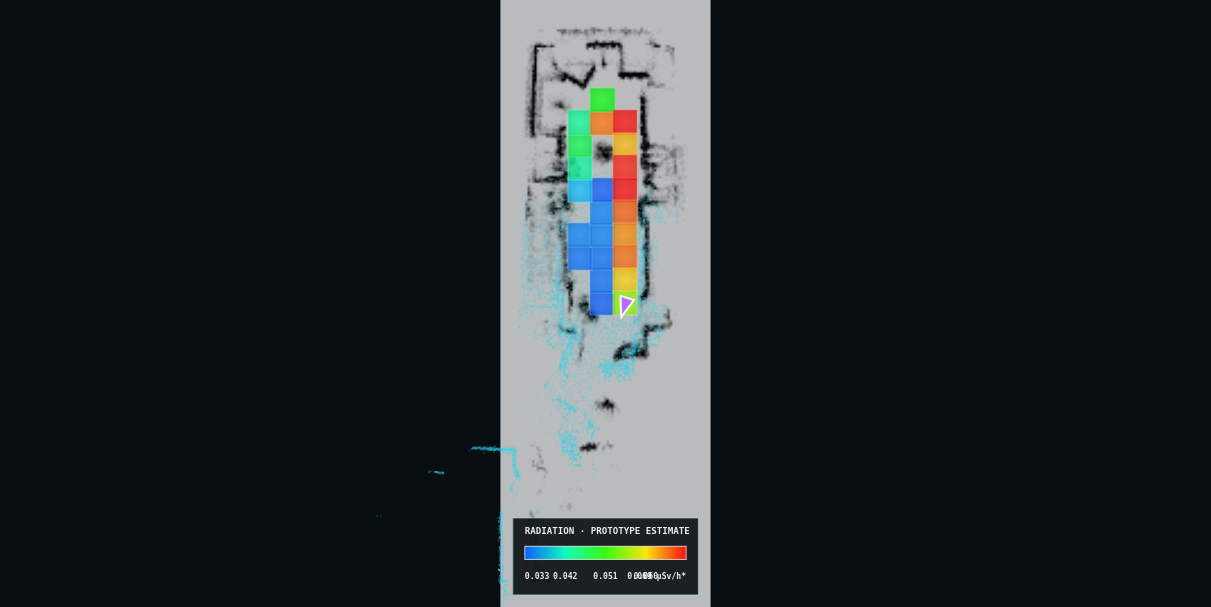
Measured radiation heatmap generated during weak-source system testing
summer-radiation-measured-heatmap.png

Overview

During my King's College London research internship, I developed a new operating architecture for the existing radiation-monitoring robot. Unlike the final-year autonomous patrol project, this work focused on two separate workflows: direct operator control through Manual Mode and human-supervised measurement planning through Intelligence Mode.

Research project · May–Aug 2026.

As a Research Intern, I led and supervised three Summer School students, allocating research, software, testing, and documentation work around their technical backgrounds. The team iterated the robot workflow, strengthened the base mounting system, and prepared the platform for repeatable testing and demonstration.

What was developed

Operator-controlled workflow

Manual Mode

  • Browser-based remote movement with explicit arm, stop, disarm, and deadman controls.
  • Live front-camera, 3D LiDAR, mapping, and localisation status for operator awareness.
  • Radiation-survey workflow with live spatial visualisation and structured session data.
  • Iterative robot testing used to resolve movement, connection, and interface issues.

Human-supervised measurement planning

Intelligence Mode

  • Gaussian-process radiation-field model that estimates both readings and spatial uncertainty.
  • Measurement planner that proposes informative next locations within mapped free space.
  • Per-waypoint approve, skip, and abort workflow, supported by route planning and proximity checks.
  • Synthetic-source, automated, bench, and staged robot-drive testing used before radiation evaluation.
  • Redesigned the base mounting system to improve stability during system integration and operation.
  • Produced photo-led operating documentation for repeatable setup and manual control.
  • Supported research demonstrations and technical explanation at King's College London Open Day.

Testing boundary: system testing used only a weak radiation source. The recorded results demonstrate end-to-end sensing, mapping, visualisation, and supervised operation under low-signal conditions. Intelligence Mode remains human-supervised, and these tests do not establish strong-source detection performance, clinical accuracy, deployment readiness, or regulatory validation.

System testing

Key technical highlights

  • Manual Mode
  • Human-supervised Intelligence Mode
  • Browser-based robot control
  • Live camera and 3D LiDAR
  • Mapping and localisation
  • Gaussian-process field modelling
  • Measurement planning
  • LiDAR-aware route planning
  • Radiation visualisation
  • Mechanical mounting redesign
  • Photo-led operating documentation
  • Research team leadership

Tools and skills

Python, Unitree Go2 SDK, browser-based control, radiation sensing, Gaussian-process modelling, measurement planning, route planning, LiDAR, localisation, telemetry, 2D/3D heatmaps, structured testing, system integration, mechanical mounting design, technical documentation, and supervision of three students.

Back to Projects